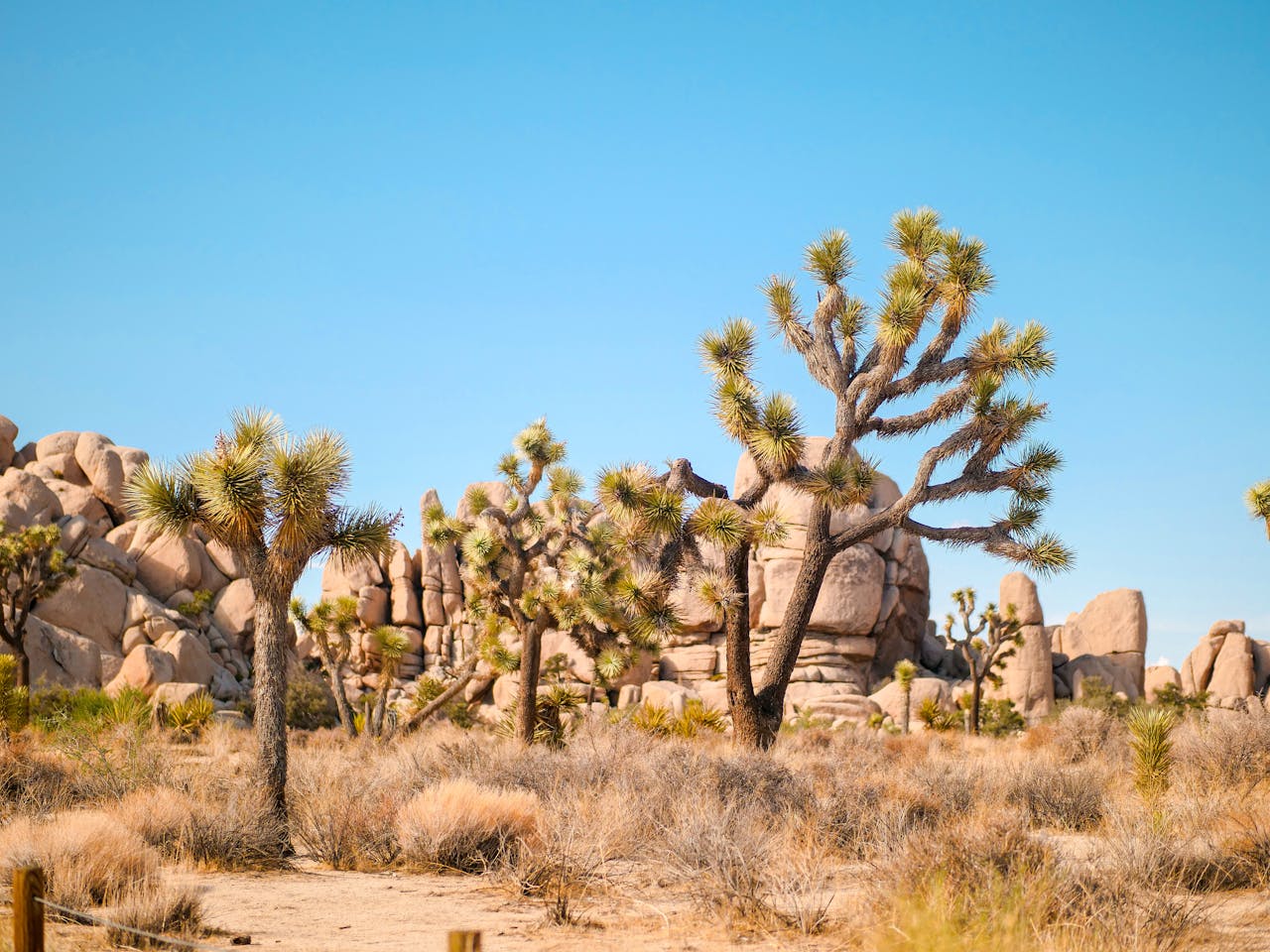
Joshua Tree pairs Mojave boulders with the iconic trees that gave the park its name. It's a favorite for couples who want their ceremony framed by something strange and beautiful. It's less polished than Sedona, more raw than Palm Springs.
Joshua Tree has become one of the most sought-after elopement destinations in the American Southwest, and for good reason. The landscape is unlike anywhere else. Here you'll find ancient yucca trees, massive granite boulders, and open desert that stretches toward the horizon in every direction.
Couples are drawn here for the contrast. Morning light turns the rocks gold. Golden hour stretches long and soft across the Mojave. After dark, the sky fills with more stars than most people have ever seen in their lives.
The area around Joshua Tree National Park includes the small towns of Yucca Valley, Twentynine Palms, and Pioneertown, each with its own character and a growing community of photographers, planners, and venues who specialize in desert weddings. Whether you're planning an intimate ceremony for two or a gathering of thirty, the vendors in this directory know the terrain, the light, and how to help you elope here well.
Joshua Tree is a high desert region in southeastern California anchored by Joshua Tree National Park and the surrounding Mojave Desert towns of Yucca Valley, Pioneertown, and 29 Palms. The area sits at roughly 3,000 feet and is known for its sculptural namesake trees, piled granite boulders, and dramatic open desert that draws couples looking for an unconventional ceremony setting.
Joshua Tree offers couples a landscape like none other. The strange sculptural trees and the piled-up Mojave boulders create the sense of having arrived somewhere set apart from ordinary life. It's a place that suits couples who want their wedding day to feel a little wild, a little otherworldly, and wholly their own. Couples planning a Joshua Tree elopement or micro-wedding have various location options for their ceremony. Locations include Joshua Tree National Park itself, on the wilder BLM land that surrounds it, or at one of the striking private properties scattered through the high desert towns of Yucca Valley, Pioneertown, and 29 Palms.
Most couples stay two to three days. The area is compact enough that you can hold a ceremony and gather for photographs in dramatically different settings within a single trip, and it sits close enough to Palm Springs (45 minutes) and Los Angeles (about two and a half hours) that many couples combine it with time elsewhere.
Joshua Tree sits at around 3,000 feet. Since this is high desert, temperatures swing more dramatically than in Palm Springs just south. The difference matters for planning.
The prime windows are mid-October through mid-May. October and November offer warm days, cool nights, and the year's most stable weather. March and April can be spectacular with desert blooms, if winter rains cooperate. Late April and early May are often the sweet spot: long daylight hours, wildflowers fading but still present, and temperatures that haven't yet turned hostile.
Summer is genuinely dangerous. Daytime highs above 105°F are common from June through September, and ceremonies in full sun become health risks rather than celebrations. Couples determined to elope in summer plan ceremonies for dawn or just before sunset and skip the middle of the day entirely.
Winter nights drop into the 30s and occasionally below freezing, but clear winter days are among the most beautiful in the park. A December or January Joshua Tree elopement works well if you plan around the cold and have warm layers ready.
The area offers three distinct categories of locations, each with a different vibe.
Inside the National Park: The park designates specific sites for small ceremonies. These include Hidden Valley Picnic Area, Indian Cove Amphitheater, Cap Rock, and several others. Access is limited, and the park restricts ceremony size at most sites. The visual payoff is significant, as these are the most iconic backdrops in the region.
BLM and surrounding public land: The land outside the park boundaries is less regulated but equally striking in many places. Pipes Canyon, the area around Pioneertown, and swaths of BLM-managed high desert all offer ceremony-worthy locations with the kind of privacy that's harder to find inside the park.
Private desert compounds: The high desert has become known for architecturally distinctive homes and compounds that host small weddings. The Lautner Compound is the most famous, and dozens of other private venues offer similar settings. These properties tend to cost more but eliminate permit logistics entirely and often include full service planning, vendors, and accommodations for your traveling guests.
Joshua Tree National Park requires a Special Use Permit for any ceremony, regardless of size, and commercial photography permits are separate from ceremony permits. Applications should be submitted several weeks in advance at minimum. Popular dates and locations fill further out. Group size limits and location restrictions vary by site within the park.
BLM land around the park is administered by the California Desert District and has its own permit framework, generally less restrictive than the park's but still requiring advance notice for ceremonies. Private venues handle permitting internally.
Permit fees and processing timelines change regularly. Verify current requirements with Joshua Tree National Park or the BLM California Desert District before committing to a specific location or date. Local vendors are also very knowledgeable in this arena and can help guide you through the process.
Most couples fly into Palm Springs International (PSP), which is the closest major airport at about 45 minutes away and offers direct flights from many West Coast cities. LAX is roughly two and a half hours by car. Ontario (ONT) is slightly closer. A rental car is necessary. Joshua Tree itself is small, but ceremony locations are spread across a wide area.
Joshua Tree benefits from its proximity to Los Angeles, a large, competitive vendor market just a few hours away, which keeps pricing more accessible for couples working with moderate budgets.
A simple Joshua Tree elopement with photographer, officiant, and park permit generally runs $2,500 to $5,500. Adding florals, hair and makeup, and a planner moves most couples into the $7,000 to $12,000 range. Full micro-weddings with twenty to forty guests, a private venue, and catering typically start around $15,000 and scale from there. Premium private compounds push costs higher, especially in peak season.
Actual pricing varies by vendor, season, and ceremony complexity. The directory above links to vendor websites for specific quotes.
The vendors above work regularly in Joshua Tree and the surrounding high desert. Many are based in Los Angeles or Palm Springs and travel into the area; others live in the high desert towns year-round. Reach out to various vendors to find your best fit.
How much does it cost to elope in Joshua Tree?
A simple Joshua Tree elopement with photographer, officiant, and park permit generally runs $2,500 to $5,500. Adding florals, hair and makeup, and a planner brings most couples into the $7,000 to $12,000 range. Full micro-weddings with twenty to forty guests, a private venue, and catering typically start around $15,000.
What's the best time of year to elope in Joshua Tree?
The prime windows are mid-October through mid-May. October and November offer warm days, cool nights, and the year's most stable weather. March and April can be spectacular when winter rains produce desert blooms, and late April into early May is often a sweet spot for long daylight and manageable temperatures.
Can you get married in Joshua Tree National Park?
Yes, but ceremonies require a Special Use Permit and are restricted to specific designated sites such as Hidden Valley Picnic Area, Indian Cove Amphitheater, and Cap Rock. Group size is capped at most locations, and commercial photography permits are separate from ceremony permits. Popular dates fill well in advance.
Is summer too hot to elope in Joshua Tree?
Daytime highs above 105°F are common from June through September, and ceremonies in full sun can become health risks rather than celebrations. Couples determined to marry in summer plan ceremonies for dawn or just before sunset and avoid the middle of the day entirely.
What airport do you fly into for a Joshua Tree elopement?
Most couples fly into Palm Springs International (PSP), the closest major airport at about 45 minutes away with direct flights from many West Coast cities. Ontario (ONT) is slightly closer, and LAX is roughly two and a half hours by car. A rental car is necessary.
Where can you elope in Joshua Tree besides the national park?
The BLM land surrounding the park offers ceremony locations with fewer restrictions and more privacy, including areas around Pipes Canyon and Pioneertown. The high desert is also known for architecturally distinctive private compounds like the Lautner Compound, which host small weddings with no permit logistics required.